Manufacturer · Standard and custom
Slide-In Nut Manufacturer for Aluminum Extrusions
Source standard or custom slide-in nuts directly from the manufacturer for adjustable connections in industrial aluminum extrusion slots.
Product overview
Slide-In Nut Manufacturer for Aluminum Extrusions
A slide-in nut moves along the slot of an industrial aluminum extrusion before being locked by the mating bolt. This adjustable positioning is useful for brackets, sensors, guide rails, panels and accessories that must be aligned during assembly. Width, thickness, thread location and the internal slot space all influence the fit.
Wenzhou Longjin Fastener Co., Ltd. manufactures slide-in nuts with common M3-M10 threads. Standard parts can be matched by profile family and slot width. Special cavity shapes, low-profile designs or specified materials can be reviewed from a drawing, sample or extrusion section before sampling and production.
How to select
How to select
The nut should move smoothly during positioning and remain stable after tightening. These details define the correct version.
- 01
Slot opening and cavity
Measure the opening and share a cross-section so the part can enter without excessive movement in the cavity.
- 02
Assembly stage
State whether the nut can load from the profile end or must be added after the frame has already been assembled.
- 03
Thread size
Select the thread from the mating bolt, attachment thickness and purpose of the connection.
- 04
Corrosion conditions
Indoor equipment, humid areas and clean applications may require different materials and surface finishes.
Applications
Applications
- Brackets and joining plates
- Adjustable sensor mounts
- Rails and cable channels
- Guarding panels
- Workbench accessories
- Conveyor module adjustment
Manufacturing & quality control
Manufacturing & quality control
Outside dimensions, thread acceptance, sliding fit and surface condition are the principal checks. When a target extrusion is supplied, fit can be reviewed against the section or customer sample before the production batch.
Send the drawing or sample, quantity, material, finish, extrusion cross-section or slot width, thread and inspection requirements.- 1
Confirm slot and loading method
- 2
Review material and thread
- 3
Test sample fit
- 4
Run production and process checks
- 5
Inspect and separate-pack the batch
Purchasing & production
Purchasing & production
These are normal production conditions. Final terms follow the approved drawing, sample, quotation and purchase order.
For a quotation, send the drawing or sample, quantity, material, finish, extrusion cross-section or slot width, thread and inspection requirements.
- Standard-part MOQ
- Normally 1,000 pieces per specification.
- Custom-part MOQ
- Normally 10,000 pieces, subject to material, geometry and process review.
- Dimensions & tolerances
- Manufactured to the mutually approved drawing. Please identify critical dimensions, tolerances and mating requirements.
- Samples & tooling
- Sampling is supported. Small sample quantities are normally free of sample charge with freight collect; dedicated tooling or die costs are quoted when required.
- Production planning
- Mass production begins after sample approval. Capacity is up to about 5 million standard parts per month and 500,000 custom parts per month; delivery timing is confirmed by order quantity and process.
- Inspection
- Professional inspection equipment is used for dimensional, thread, appearance and fit requirements. 100% inspection can be arranged as agreed for the order.
- Materials & finishes
- Materials can be reviewed to specification; common finishes include nickel plating and zinc plating.
- Material documents
- Upstream material certificates or quality inspection documents can be provided for the applicable order and material batch.
- Packaging
- Customer labels, specification-separated packing and other confirmed packaging requirements are supported.
FAQ
Frequently asked questions
Must a slide-in nut load from the end of the profile?
Many slide-in designs do. Other slot-nut styles are available for post-assembly loading. Tell us whether the frame is already closed so the structure can be selected accordingly.
How can movement inside the slot be reduced?
The outside geometry needs a suitable relationship with the cavity, followed by the correct bolt and tightening method. A cross-section or extrusion sample helps confirm the fit.
Can you make a thin design or move the thread position?
Special thicknesses and thread locations can be reviewed from a drawing. A sample approval is recommended before producing unusual geometry in volume.
Longjin
Explore related products
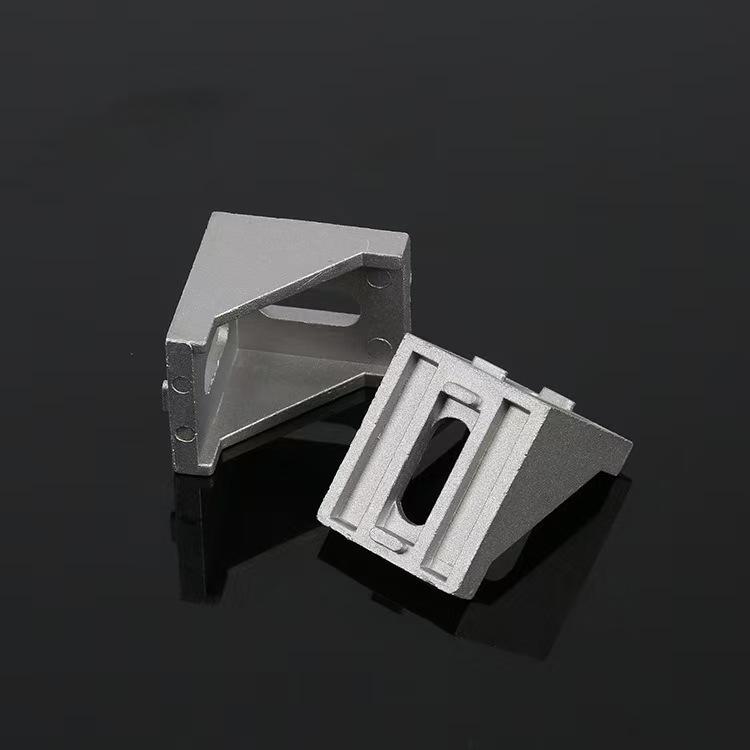
Aluminum framing connections
Aluminum Profile Accessories for Industrial Framing
View details →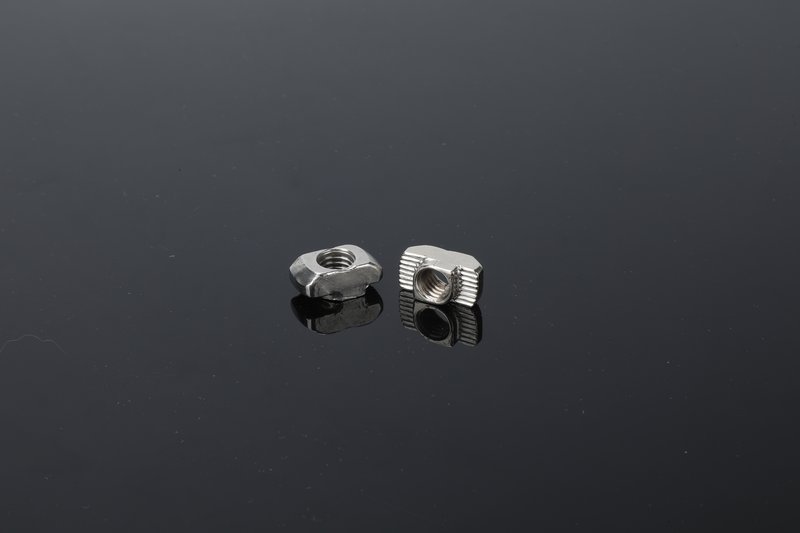
In-slot threaded fasteners
T-Slot Nuts for 20, 30, 40 and 45 Series Profiles
View details →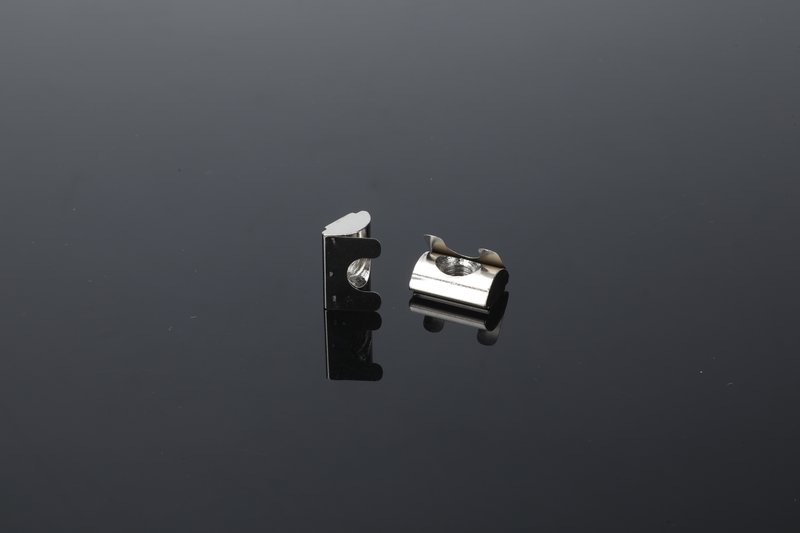
Position-retaining slot nuts
Spring Nuts for 20, 30, 40 and 45 Series Profiles
View details →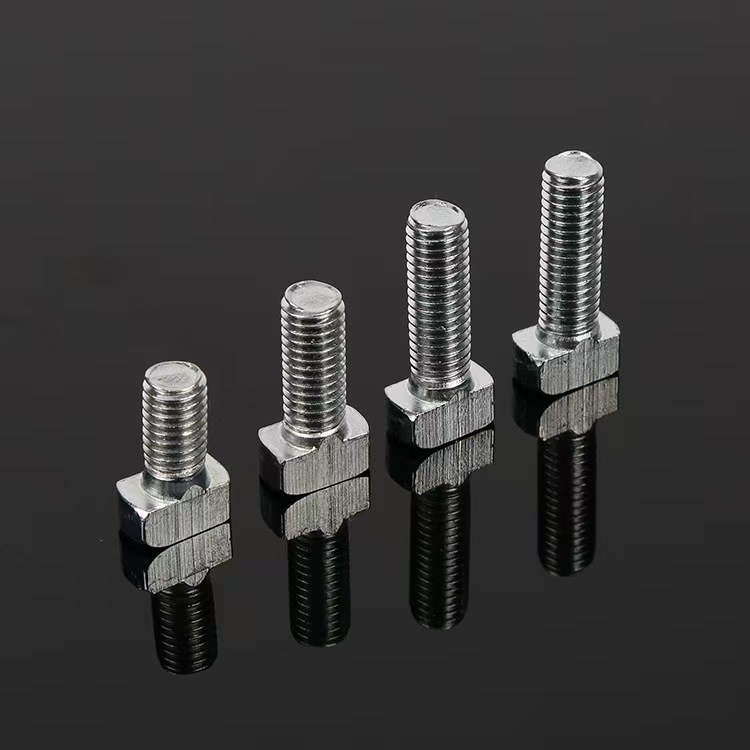
Bolts for extrusion slots
T-Slot Bolts for 20, 30, 40 and 45 Series Profiles
View details →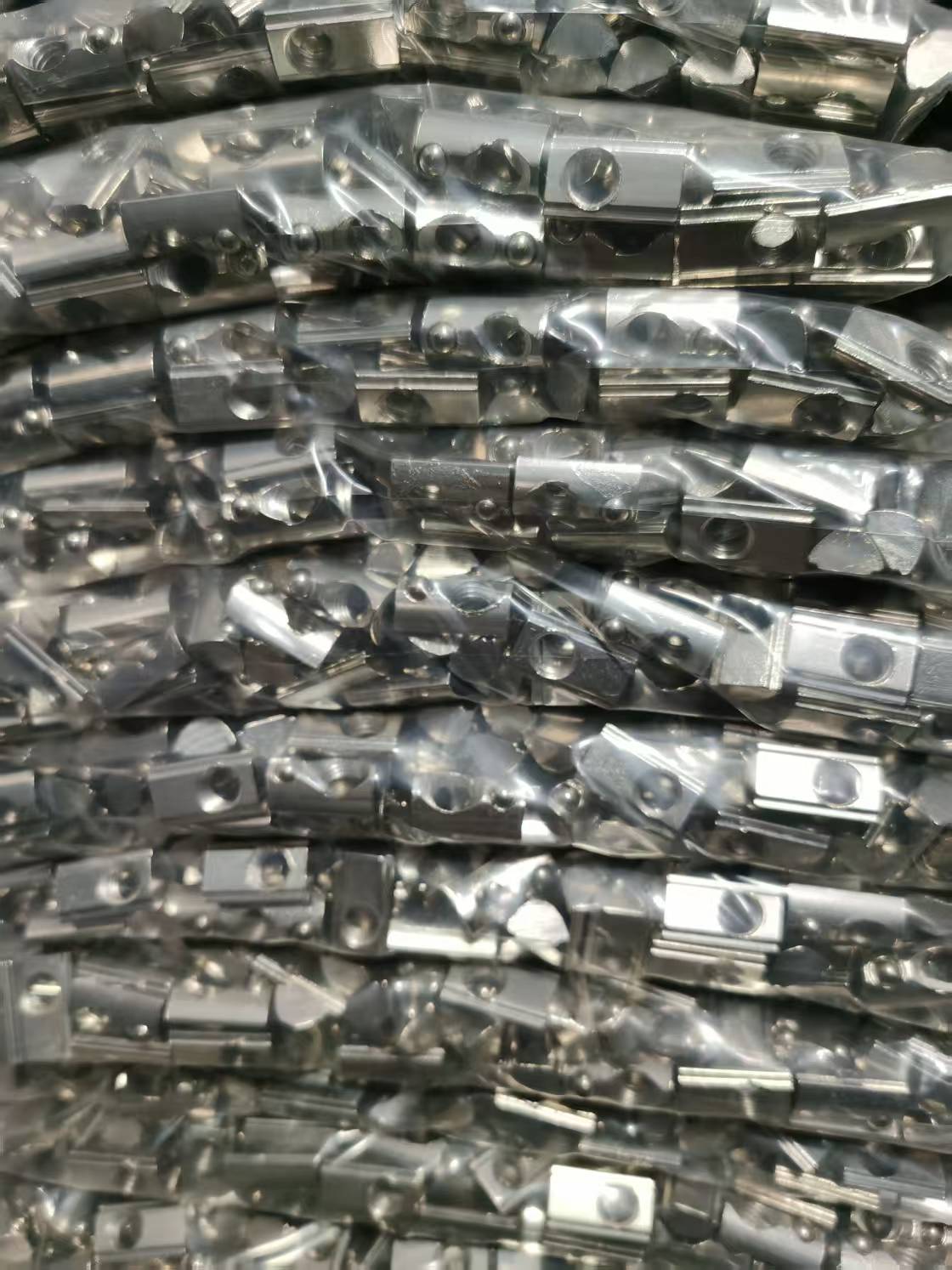
Made to drawing or sample
Custom Fasteners for Aluminum Profile Systems
View details →Longjin Fastener
Send an inquiry
Send the drawing or sample, quantity, material, finish, extrusion cross-section or slot width, thread and inspection requirements.